
Summer might be right around the corner, or perhaps you’re prepping for a winter ski trip. Regardless of the season, there is one non-negotiable step in your skincare routine: Sunscreen.
We all know we need it, but standing in the drugstore aisle staring at dozens of bottles can be overwhelming. How are you supposed to know which one to buy?
Tired of the guessing game? Take our quick, 60-second Sunscreen Finder Quiz below to get personalized product recommendations right now!
The core decision facing consumers is often Mineral vs. Chemical sunscreens. While both protect you from sun damage, they work in fundamentally different ways. This guide breaks down the science, the ingredients, and the pros and cons of each so you can decide which formula deserves a spot in your suncare routine.
The Core Difference: How They Work
At a high level, mineral and chemical sunscreens share the same goal: protecting your skin from UVA (aging) and UVB (burning) rays. However, their methods of protection are distinct.
Mineral Sunscreen (Physical Blockers)
Mineral sunscreens—often called “physical” sunscreens—sit on top of the skin like a shield. They contain active mineral ingredients that work primarily by reflecting and scattering UV light away from the skin (though recent science shows they also absorb some UV and release it as heat).
-
-
- Mode of Action: Deflects and blocks UV rays.
- Activation: Works immediately upon application.
-
Chemical Sunscreen (UV Absorbers)
Chemical sunscreens penetrate the top layer of the skin. They act like a sponge, absorbing UV radiation and causing a chemical reaction that converts the UV light into heat, which is then released from the skin.
-
-
- Mode of Action: Absorbs and neutralizes UV rays.
- Activation: Requires about 15–20 minutes to fully absorb and become effective.
-
Ingredient Breakdown
Knowing what to look for on the label is half the battle. Here are the common active ingredients for Mineral vs. Chemical Sunscreen.
Mineral Active Ingredients
These are generally recognized as safe by the FDA and are often recommended for those with sensitive skin.
-
-
- Titanium Dioxide: A white pigment that is highly effective at blocking UVB rays. It is often used to smooth the application texture.
- Zinc Oxide: The gold standard for mineral SPFs. It provides broad-spectrum protection (blocking both UVA and UVB) and is known for being anti-inflammatory and non-comedogenic (won’t clog pores).
-
Chemical Active Ingredients
These ingredients are often combined to achieve broad-spectrum protection and high SPF ratings without a heavy feel.
-
-
- Avobenzone: The primary UVA absorber; crucial for protecting against long-term skin aging.
- Oxybenzone: A highly effective UVA & UVB absorber (though often cited in environmental concerns).
- Octocrylene: A UVB absorber often paired with Avobenzone to stabilize it and make it last longer.
- Octinoxate: A powerful UVB absorber used to prevent sunburn.
- Homosalate: Helps the sunscreen stay water-resistant and degrade slower in sunlight.
-
Pros & Cons: Which is Right for You?
The dilema of Mineral vs. Chemical Sunscreen often comes down to your skin type and lifestyle. Here is a side-by-side comparison to help you weigh the options.
Mineral Sunscreen
| The Good (Pros) | The Bad (Cons) |
| Physical Barrier: Sits on top of the skin; excellent for immediate protection. | White Cast: Can leave a visible pale or purple residue, especially on medium to deep skin tones. |
| Sensitive Skin Safe: Zinc oxide is naturally anti-inflammatory, making it ideal for acne, eczema, and rosacea. | Texture: Formulations can feel thicker, heavier, or “chalky” compared to chemical options. |
| Reef Friendly: Generally considered safer for marine life and coral reefs. | Less Water Resistant: Can rinse off more easily than chemical binders; requires strict reapplication after swimming. |
| Broad Spectrum: Zinc offers excellent protection against both UVA and UVB rays. | Flashback: The reflective minerals can cause a “washed out” look in flash photography. |
Chemical Sunscreen
| The Good (Pros) | The Bad (Cons) |
| Cosmetically Elegant: Lightweight, thin, and absorbs quickly. Great for wearing under makeup. | Skin Irritation: The chemical reaction that releases heat can irritate sensitive or rosacea-prone skin (stinging sensation). |
| No White Cast: Since it absorbs into the skin, it is usually invisible on all skin tones. | Wait Time: You must wait 15–20 minutes after application before going into the sun. |
| Water Resistance: Formulations tend to hold up better during sweating or swimming. | Systemic Absorption: FDA-supported research suggests some ingredients (like oxybenzone) can enter the bloodstream. |
| High SPF: Easier to formulate very high SPF ratings (50+) without a heavy texture. | Environmental Impact: Certain filters (oxybenzone, octinoxate) are banned in places like Hawaii due to coral reef damage. |
Mineral vs. Chemical Sunscreen: Find Your Match
Need help decising which one to use? Take the quiz below to get your match, and product recommendations.
Sunscreen Finder Quiz
Get a personalized SPF recommendation based on your skin type & preferences.
What is your skin type?
Do you have sensitive skin?
What do you need the sunscreen for?
Which sunscreen attribute is most important to you?
Which Strength of SPF You Should Use
Now that you have your product recommendations, there is one question left, which strength of SPF should you use?
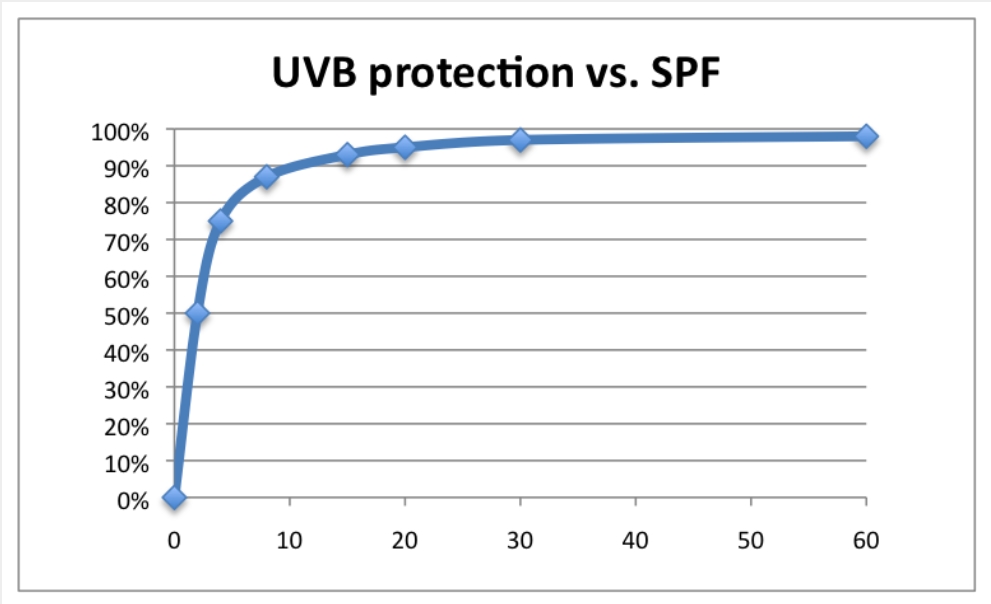
The American Academy of Dermatology recommends a broad-spectrum sunscreen of SPF 30 or higher for everyone, regardless of skin tone. While you may think jumping from 30 to 50 SPF means 20% more coverage, the difference between the two is actually very small. The chart below shows different SPF levels and their percent protection against harmful rays.
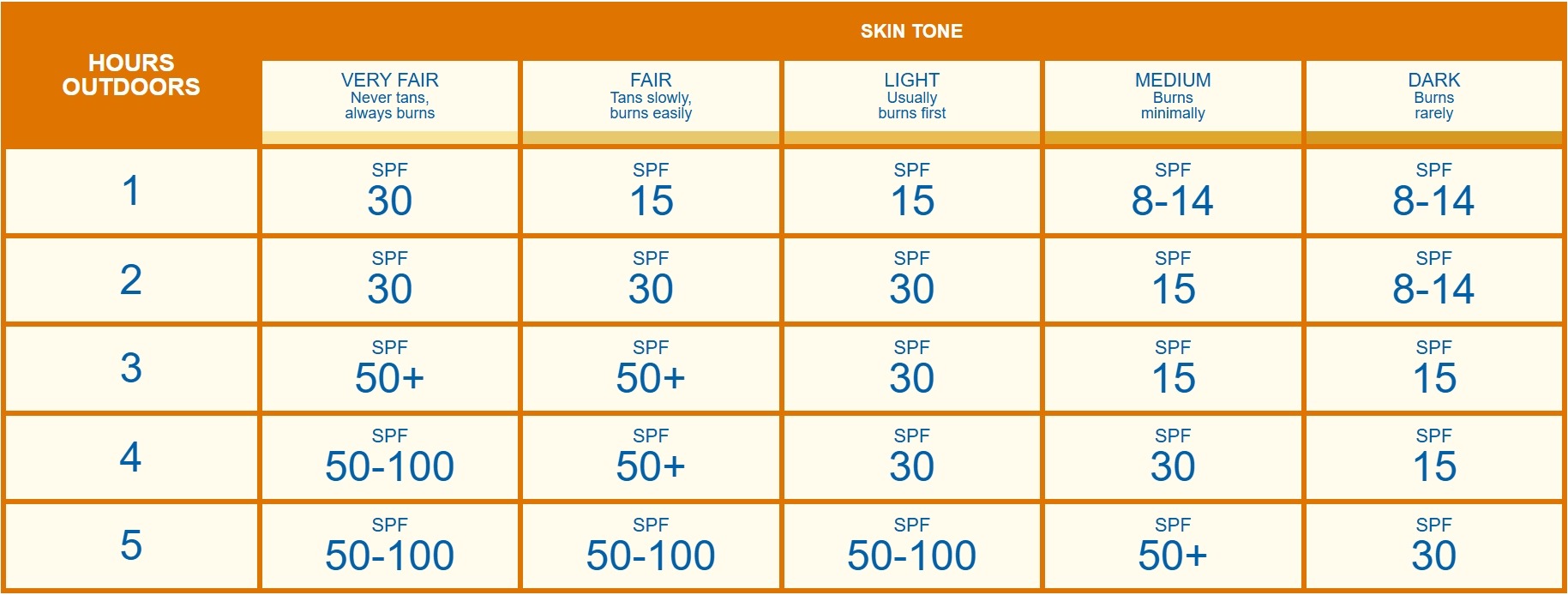
While darker skin tones have more natural melanin (which offers some intrinsic protection), they are still susceptible to UV damage and hyperpigmentation. Below is a chart by Banana Boat showing which level of SPF to use based on your skin tone and your estimated sun exposure time.
Decoding the Label: Sunscreen Terminology
To buy the right product, you need to speak the language. Here is a quick glossary of terms you’ll see on the bottle.
-
-
- Broad Spectrum: This is critical. It means the sunscreen protects against both UVA (aging) and UVB (burning) rays. MD Anderson dermatologists strongly recommend never buying a sunscreen without this label.
- Water-Resistant: There is no such thing as “waterproof” sunscreen. The FDA regulates this term to mean the SPF is maintained for either 40 or 80 minutes while swimming or sweating. Remember: You must reapply immediately after toweling off.
- PA++++: This is a rating system (common in Asian beauty products) specifically measuring UVA protection.
-
- SPF measures UVB (sunburn) protection.
- PA measures UVA (aging) protection.
- The more plus signs (+), the higher the protection. PA++++ is currently the highest grade.
-
-

Aubrie Hicks
Author
Aubrie Hicks is a beauty enthusiast with a passion for glowing skin, confidence, and the science behind self-care. She blends her love of digital marketing with her obsession for skincare and wellness, creating content that helps readers make smart, feel-good beauty choices. Whether she’s testing collagen masks or uncovering the latest skincare trends, Aubrie believes beauty starts with knowledge—and a little bit of confidence.